Introduction: The Cafe Hopping Myth
Every new digital nomad in Canggu starts with the same plan: find a cute cafe, order a smoothie bowl, and work until sunset. It looks idyllic on Instagram. But after two weeks of fighting for power outlets, enduring playlist loops, and explaining to baristas that yes, you really do need to stay for five hours, the reality sets in. Cafe hopping is great for lifestyle content — but terrible for actual productivity. This is why experienced nomads quickly graduate to Canggu coworking spaces.
The difference between working from a Canggu cafe and a dedicated coworking space isn't subtle — it's transformational. Canggu coworking environments are designed by people who understand remote work because they do it themselves. Every chair, every outlet placement, every lighting decision serves a purpose. When your livelihood depends on reliable output, choosing the right workspace stops being optional and becomes essential.
The Productivity Problems with Canggu Cafes
Canggu's cafe scene is genuinely world-class. Specialty coffee rivals Melbourne's. Smoothie bowls are works of art. The atmosphere is vibrant and inspiring. But these same qualities that make cafes perfect for breakfast make them terrible for focused work. The ambient noise level in popular Canggu cafes averages 70–75 decibels — comparable to a busy highway. Background music, espresso machines, and conversation create a soundscape that makes deep concentration nearly impossible.
Power outlet scarcity is another constant frustration. Popular cafes might offer four outlets for thirty customers, creating an unspoken competition for charging privileges. Internet speeds vary wildly depending on how many customers are streaming, and cafe WiFi rarely includes backup connections. When your video call drops because someone started a Netflix binge at the next table, the cost of 'free' workspace becomes clear.
Perhaps most importantly, cafe culture in Canggu is designed for socializing, not productivity. Staff expect table turnover. Other customers expect conversation. The pressure to order another coffee every hour creates both financial and psychological stress. After a month of cafe hopping, most nomads calculate the true cost — and discover that a Canggu coworking membership actually saves money while dramatically improving output.
Why Canggu Coworking Wins on Every Metric
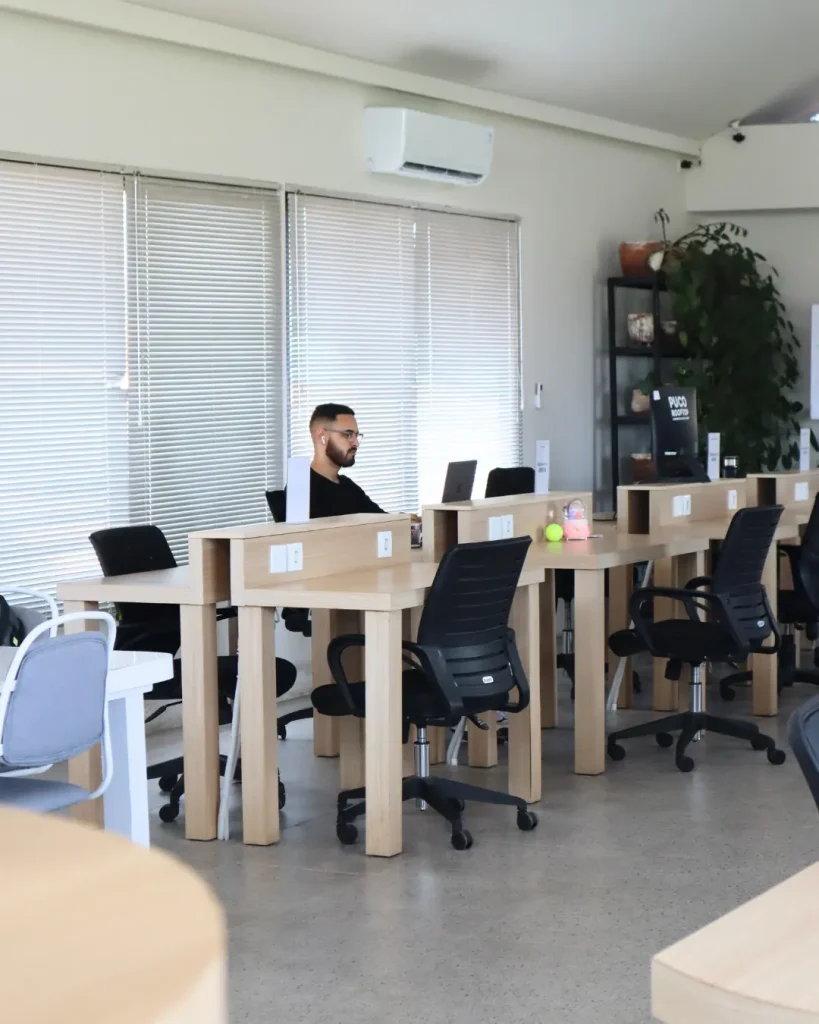
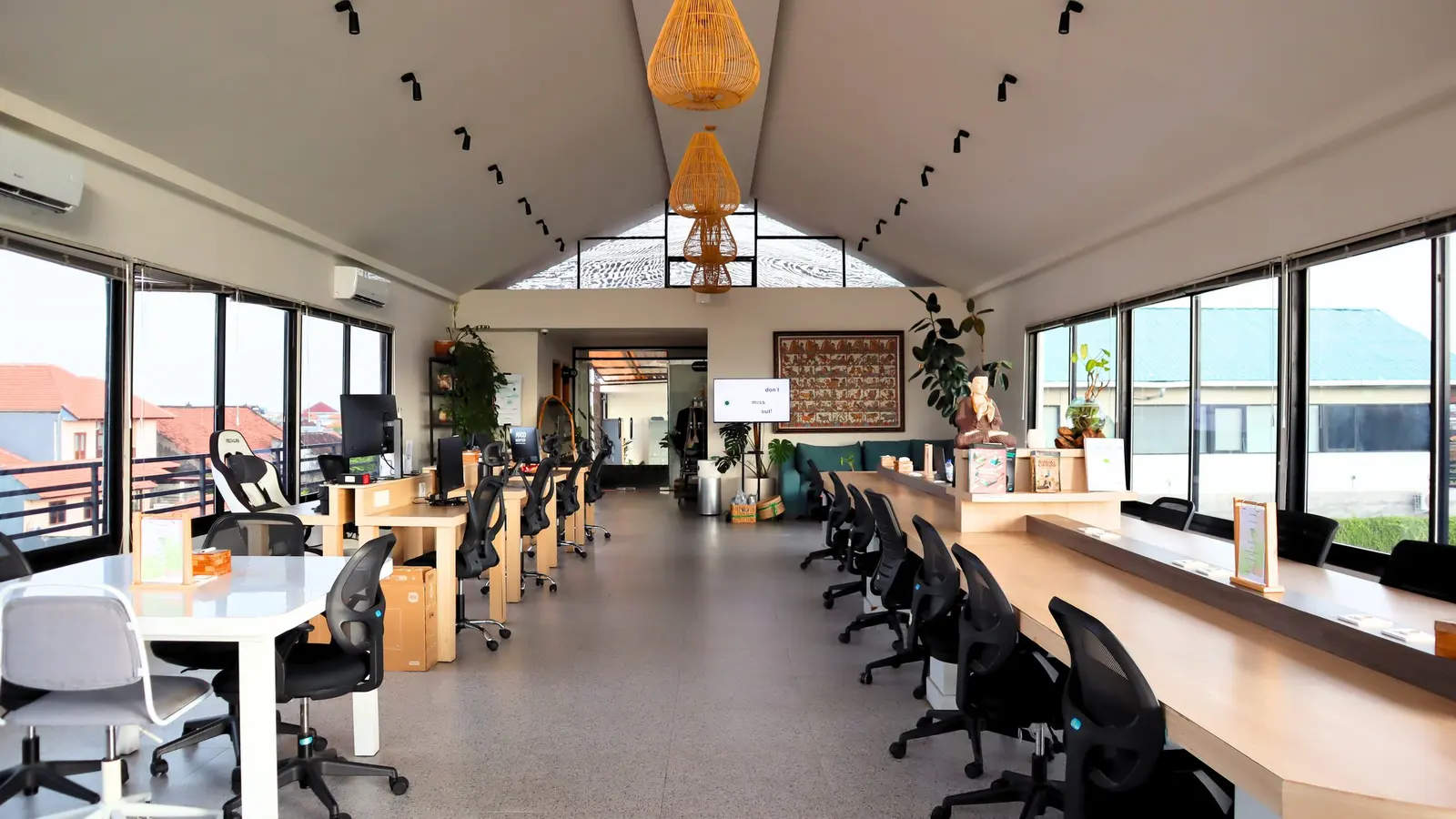
Switch to a Canggu coworking space and the improvements are immediate and dramatic. Internet speeds jump from unreliable cafe WiFi to guaranteed 80–100 Mbps fiber with automatic backup. Noise levels drop to 40–45 decibels in quiet zones — the ideal range for sustained focus. Power outlets appear at every desk, often with USB-C charging built in. Ergonomic chairs replace cafe furniture designed for 30-minute visits.
The financial comparison surprises many nomads. A typical cafe workday in Canggu costs $15–$25 in food and drinks. Multiply by 22 working days and you're spending $330–$550 monthly — without guaranteed seating, reliable internet, or professional amenities. A monthly Canggu coworking membership at PUCO Rooftop costs less while providing unlimited coffee, dedicated desk space, meeting room access, and a community of fellow professionals.
The community advantage is harder to quantify but equally valuable. Coworking spaces attract people who are there to work, not to socialize. This shared intention creates an atmosphere of productive energy that's impossible to find in cafes. When everyone around you is focused on meaningful work, your own motivation increases. When you need a break, conversations with fellow professionals provide genuine value rather than idle chitchat.
The Hybrid Approach: Cafes for Breaks, Coworking for Work
The most productive digital nomads in Canggu don't eliminate cafes entirely — they use them strategically. Cafes become destinations for breakfast meetings, creative brainstorming sessions, and weekend laptop-free reading. Coworking spaces handle the heavy lifting: focused project work, client calls, video conferences, and deep creative sessions. This division maximizes the strengths of each environment while eliminating their weaknesses.
PUCO Rooftop makes this hybrid approach effortless. The on-site eatery provides cafe-quality food and coffee without requiring you to leave the workspace. When you do want to explore Canggu's cafe scene, you're doing so as a genuine customer rather than a workspace refugee — ordering because you want the food, not because you need the WiFi password.
For digital nomads serious about their careers, the workspace decision is strategic, not aesthetic. Canggu coworking spaces offer the infrastructure, community, and professional environment that remote work requires. Cafes offer the lifestyle moments that make Bali special. Use both, but use them wisely — and watch your productivity transform.
Enjoyed this article?
Share it with fellow digital nomads
Ready to Experience Canggu?
Book your stay at Puri Canggu and join 3,000+ digital nomads who call this paradise home.